
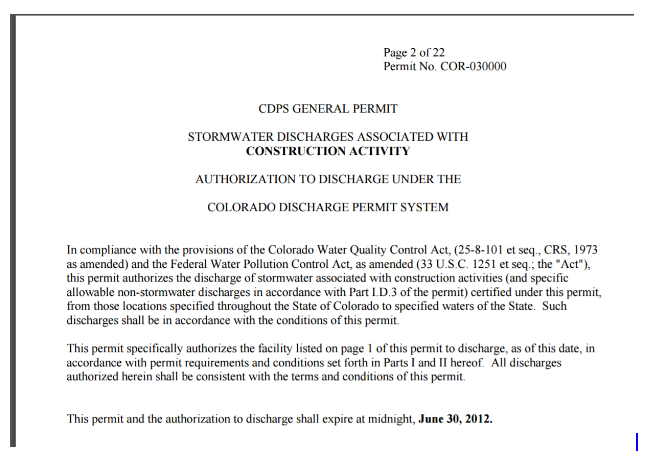
When you’ve applied for a state permit from the State of Colorado, what are you actually “permitted” to do? Your permit is part of the Colorado Discharge Permit System. Check out the language below from the State’s permit:
What does it mean?
What you are seeing in the document is that the State of Colorado has a permit from the Federal government, which “authorizes the discharge of stormwater associated with construction activities”. Of course this comes with terms and conditions which are spelled out in the Colorado Water Quality Control Act and the Federal Water Pollution Control Act.
When a property owner applies for a stormwater permit, they are essentially coming under the existing State of Colorado General Permit. Of course, there are terms and conditions governing this as well. When you apply for a permit and create a SWMP you agree to work within the State’s program. This keeps you and the state in compliance with federal regulations.
What’s the practical application here? Most important is understanding the purpose of your permit. You are indeed authorized to discharge stormwater, BUT must create a plan to limit pollution associated with the stormwater discharge to the maximum extent practicable. This is a recognition of the fact that you cannot contain on a site all the stormwater precipitation that falls on a site. But also a recognition that when stormwater runoff leaves the site, you must take steps to limit pollutants such as sediment, equipment fluids, construction materials and trash and debris.
So the purpose of your permit is to protect the waters of the United States (Federal permit language) by controlling pollutants and/or treating pollutants before they leave your site.
The title of this blog asks the question: Permitted to Pollute? The answer is, no. If you follow the stormwater compliance regulations, you are in fact permitted to discharge stormwater, but you are not permitted to pollute.
Clear as mud?