
As discussed in previous blogs, stormwater compliance involves many moving parts. Violations can happen—sometimes unintentionally. In this blog, we highlight the top five stormwater compliance issues we most frequently encounter on projects across Colorado.
1. Lack of a SWMP and/or its implementation
A Stormwater Management Plan (SWMP) is a required component of the Colorado Department of Public Health and Environment (CDPHE) stormwater permit. The SWMP identifies the best management practices (BMPs) necessary for a project and specifies where they should be installed. However, the SWMP is not simply a document to keep on file—it must be actively implemented on the project. Failing to have a SWMP in place is a compliance violation, and so is having a plan that does not match actual site conditions. For example, if BMPs are described in the SWMP but not installed (or vice versa), the site is out of compliance. To remain compliant, projects must maintain a complete, detailed, and routinely updated SWMP that accurately reflects ongoing site activities.
2. Failure to install/maintain BMPs
The BMPs that are discussed in the SWMP must be properly installed and routinely maintained to remain effective. Correct installation from the start of the project will reduce future maintenance needs. Since construction sites are dynamic and conditions can change daily, it is equally as important to keep up on BMP maintenance. BMPs that are compliant one day can be compromised the next. For example, a silt fence may be damaged by equipment, or rock socks protecting an inlet may become ineffective if driven over. Because BMPs are susceptible to damage during everyday site activities, it is crucial to regularly inspect them, repair issues promptly, and ensure they continue to function as intended to avoid compliance violations.
3. Improper site stabilization
Site stabilization is a critical requirement of stormwater compliance and falls into two categories: temporary and permanent. Temporary stabilization methods, such as erosion control blankets, temporary seeding, or covering stockpiles, are used to protect disturbed soils until permanent measures can be established. Permanent stabilization is required once construction or earthwork is complete and typically involves practices like sodding, landscaping, permanent seeding, or
paving. Leaving soils exposed after project completion, or failing to stabilize areas within the timeframes required by regulation, constitutes a violation and increases the risk of erosion and sediment discharge.
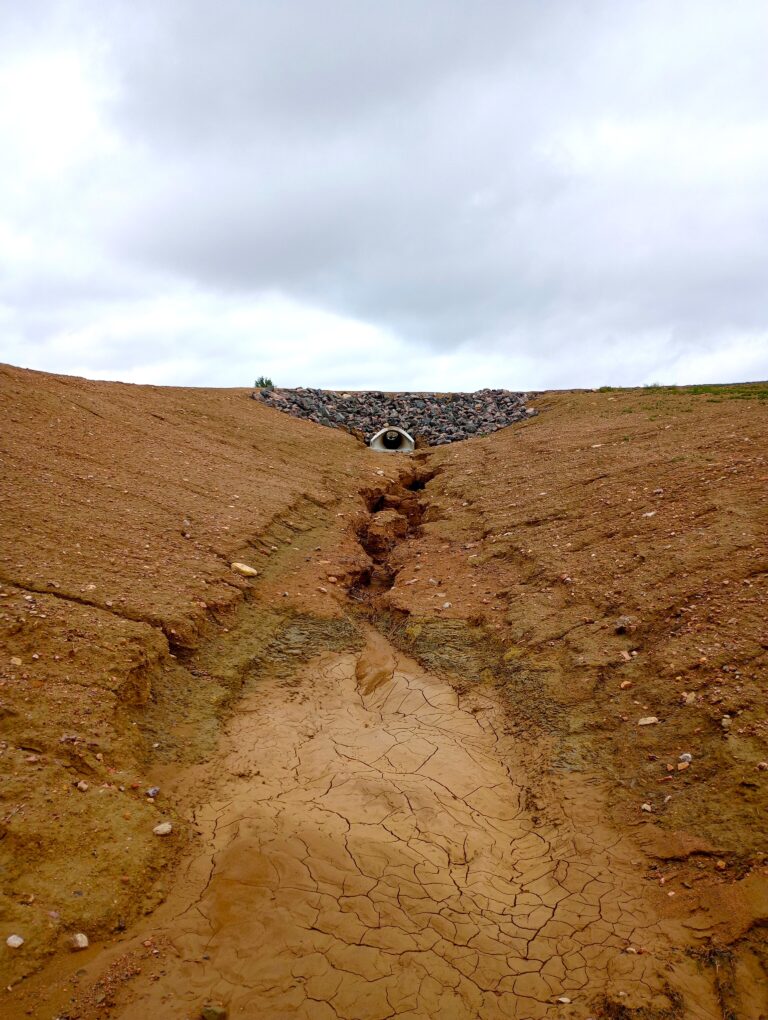
Lack of stabilization led to severe erosion. The lost soil has the potential to impact waterways.
4. Unauthorized discharges
Unauthorized discharges occur when pollutants enter stormwater systems or nearby surface waters because there aren’t proper control measures in place. Common examples include concrete washout water, paints, fuels, oils, and other
construction-related chemicals that can wash into drains or streams during rainfall events. Even sediment tracked offsite onto roadways by vehicles can be carried into storm drains and contribute to water quality violations. These discharges not only harm the environment but also expose the site to regulatory penalties and enforcement actions.
5. Poor inspection and maintenance records
This is one of the most common stormwater compliance issues. Under the CDPS Construction Stormwater Permit, sites are required to conduct routine inspections—typically every 14 days and within 24 hours of a precipitation event—and to document findings in detail. Records must show not only that inspections occurred, but also that identified issues were corrected in a timely manner. Missing, incomplete, or inaccurate inspection logs, as well as a lack of documentation of BMP maintenance, are considered permit violations and can result in enforcement actions or fines from the CDPHE.
Staying Compliant
The key to keeping your project compliant is understanding regulatory requirements and working with a reliable stormwater compliance partner. Compliance can feel overwhelming, which is why Summit Services Group is committed to guiding you through every step of the process. Contact Summit today to prevent violations on your project!